8.31.2015

Rodan + Fields


I have just accepted a new business opportunity with the #4 largest premium skincare company in the U.S., made by the same doctors who created Proactiv.

These products are high quality, clinical products that last 60+ days and have a empty bottle guarantee: if you use it for 60 days and are not satisfied, you can get a full refund. And less than 1% return!

If you are someone who visits the dermatologist, gets Botox, takes prescription acne medication, has wrinkles, has sun spots or sun damage, has crow's feet, has eczema, buys anti-aging products or if you HAVE SKIN, we have something for you!

Here is a quick overview of the main regimens:


I didn't even know you could get rid of freckles!

Look at some of these results:


I don't know about you but I've definitely been made fun of for my own skin problems. As an adult, it can be even more embarrassing or feel unprofessional- like you aren't taking care of your skin.

I am excited for this new adventure and just like I love to share what I learn in math and teaching, I want to share what I learn about improving my skin.

Healthy skin never goes out of style!

I would love to answer any questions you have or help you on the path of amazing skin and amazing results!

(This blog will still be about math but I couldn't hold back my excitement; math teachers want nice skin too!)

And the best thing about doing this business:
  • NO parties
  • NO deliveries
  • NO inventory
  • Did I say NO parties already?
You basically spend time using awesome products and then posting your awesome results on social media.

I could keep going but I'll stop there! Thanks for reading!

Calculator Steps


I've been procrastinating this post forever because I wanted to have it done in a notebook with color coding for you to see- but that didn't work out.

But my activity still has value and should be shared so here it is:

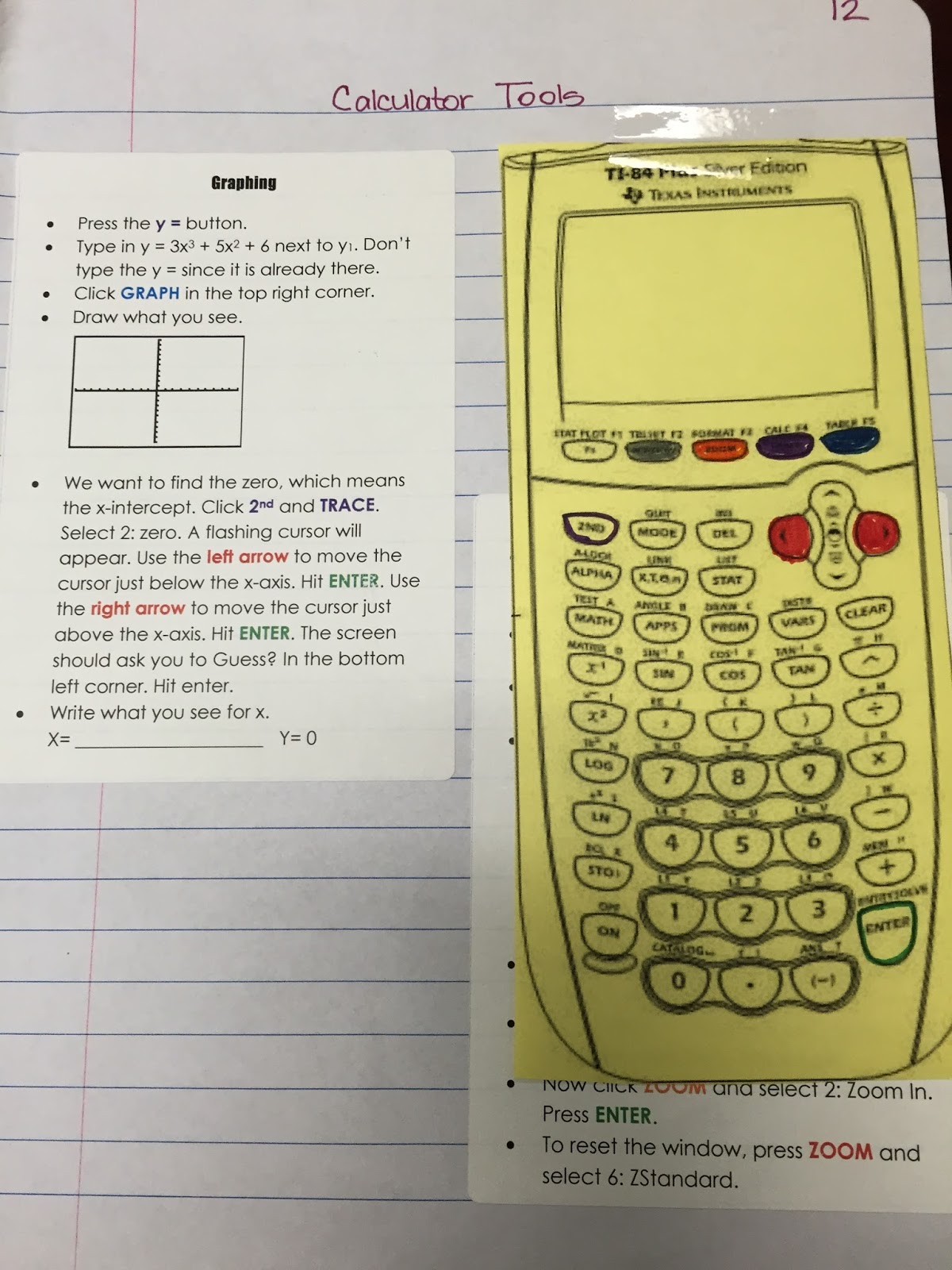
I printed calculator steps on these randomly sized labels I had in my filing cabinet and printed them IN COLOR:


We stuck the top two on the left hand page and the bottom two on the right hand page in our INBs. This is important because the colors start over on the right hand page.

The words that are in color match up with buttons on this TI-84 calculator template:


In our carts we have skinny markers so I purposely used the colors I knew we had. They colored the button on the calculator that matches the colored words.

We tape the calculator template with one piece of tape at the top over the sticker so that we could flip it up.

Here are pictures but they are not perfect- I messed up some and I had to change yellow to gray because duh, they were coloring on yellow paper. I outlined on one page and filled in on the other so students could choose which method they preferred. I also literally held this page up as they were taping so they knew EXACTLY what I wanted.


Here's the clencher:

The Calculator Handout (h/t to Julie Wright for page three)


You would think that after all that coloring they would have actually read some words on the paper...NOPE!

So now on the handout, this is a MUST....you must answer every question with one of the following:

"Look in your notebook."
"Read the directions."

Be as unhelpful as possible. In the beginning of the year, this is where you set the precedent for using the notebook as a tool.

They'll ask you what to round to, if they need to reduce, etc etc.

Be consistent! Only help if their calculator is wonky and you need to reset something.

I had an answer key ready to go and let them check their work when they were done.

While they are working, take a minute to look around and feel satisfied as they stare intently at their papers and type on their calculators and look so focused- who knows when you might see that again!

:)

8.30.2015

Ask BetterQs!

Questioning is one skill I pride myself on doing well in the classroom. I think it's a fairly easy skill to develop and at no cost to me. =)

Questioning is how I learn from others and how I learn about myself. I am very analytical and I am always asking myself questions to figure out why I feel, think, and act the way I do. Very meta, I know.

Since that skill is so embedded in me personally, it definitely comes out in the classroom. It's also my favorite thing to suggest to other teachers. Better questioning is one easy way to create depth in any lesson.

Some of my favorite questions are:
  • What do you notice?
  • What would happen if we changed this to.....?
  • What should we do next?
  • How can we start?
  • What type of answer do we expect to get?
  • How do you know that is the right answer?
  • How did you get that?
  • Why?
  • Can you explain?
  • Can you elaborate?
  • How do you picture this in your brain?

One goal I would like to work on this year is asking better questions by asking more open ended questions that promote more whole class discussion and debate.

If this resonates with you as well, I have a great resource to share with you!


@samjshah and @rdkpickle have created a collaborative space where we can both share and read about better questioning,

There's already quite a few posts and here is the first one from me!

Add it to your reader as a reminder to yourself to read, reflect, and continue working on your craft.

Be a betterT who asks #betterQs (check out our hashy)!

8.19.2015

End of Course Exams (PARCC version)


I don't know about you but every year I end the school year feeling like I did not do a good job of preparing my students.

Common Core standards became a thing during my second year of teaching. We were lucky enough to have a school improvement grant and I had an instructional coach. She had me cut up the standards and arrange them into courses in the best way I knew how.

So you see, I've never really taught without the Common Core standards looming over me. I wasn't set in my ways and I didn't have a set curriculum. It's not that it was hard for me to change, it's that I didn't know what to change.

I've always felt like I was missing this foundation of knowledge of what to teach so I didn't know what to change. And I still feel as though I do not understand the standards. They seem vague to me and I don't understand exactly what they're asking for. I just want someone to tell me specificly what to teach and then give me the freedom to teach it the way I want.

But alas, that does not exist. I'm the only high school teacher in my school and in my district so I really do feel like an island just floating out here, wondering if I will ever end up in the right location.

This year I decided to use the PARCC EOY Practice Assessment as a guide. I worked through them and they were very hard. There were problems I didn't know how to do on all of them. I actually still haven't finished the Algebra II test because I ended up crying and get a frustration headache and going to sleep. I would say lol except I definitely was not.

Anyway, I decided to try using the Algebra I and Geometry tests for my end of course exams. I changed the test some so that all questions are multiple choice and so that it is no longer a 54 page document...25 pages is plenty.

I'm scared about using them, especially since they have 45-50 questions but I can't just wander into my students being prepared. I have to take some kind of action.

I wanted to share my work with you in case anyone else could also use these and save themselves some time.

Here is Algebra I (answer keys included):


And Geometry:


8.17.2015

Collaboration Is Hard


This year I teach one Algebra I course (ninth grade) and the middle school teacher teaches another section of the same course. It's the first time I've taught the same course with someone. We also have the same plan period. Which I thought was planned but turns out it just randomly worked out that way.

She wants our course to be identical and I do too. But I decided this was the year to use a PARCC End of Year Practice Assessment as my EOC. And I decided to work on that the week before school started. I used the test to create a list of standards.

Here's the ROUGH draft:


But now she is expecting me to magically have a curriculum created to share with her...which I would love....which I don't have.

She's been asking me a lot of questions about what I teach and why I choose that order and and what does that really mean and....I realized this is the first time I've been held accountable by someone. It's the first time I've had to explain and defend my decisions. It makes me rethink my decisions. It makes me notice and wonder. It makes me feel even more behind, knowing someone is depending on me.

It's hard. I don't like it,

What year do you quit starting over from scratch?